NW2 Hairline: Mature Or Receding, And How To Tell
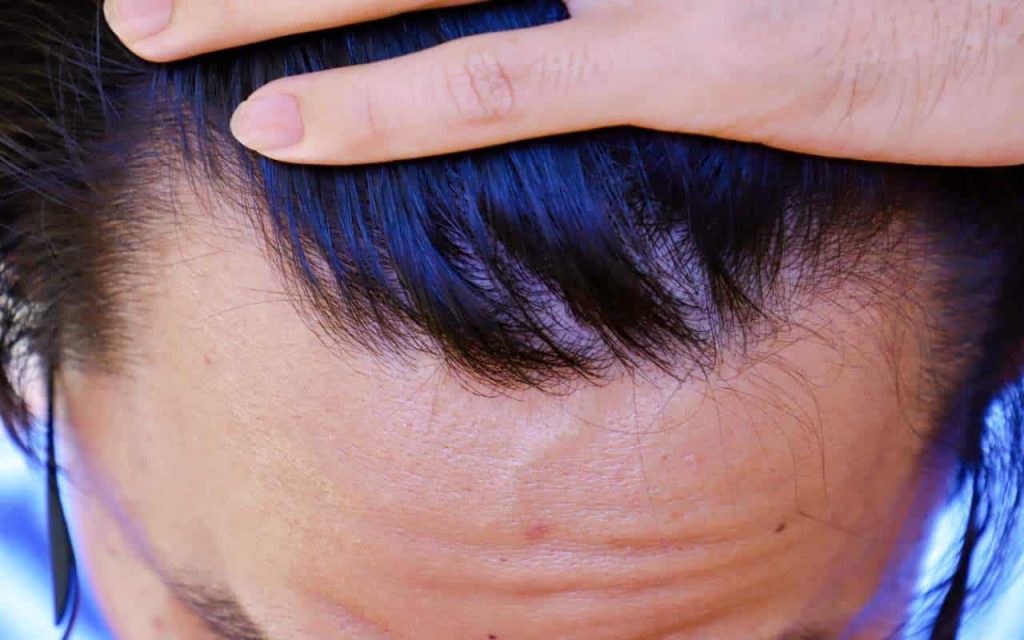
An NW2 hairline is stage 2 on the Norwood scale, the seven point scale used to measure male hair loss. It means the hairline has receded slightly at both temples, leaving the hair in the centre further forward and creating a shallow V or M shape.
It is the stage that causes the most confusion, because an NW2 hairline and a normal mature hairline look almost identical. Most men reach NW2 at some point and never go any further. Some carry on to NW3 and beyond. Working out which group you are in is the whole question at this stage, and it is a more useful thing to know than any product recommendation.
What an NW2 hairline looks like
At NW2 the recession is measured in millimetres rather than inches. The corners of the hairline have moved back a little, the hair directly above the forehead is still present, and from the front it usually reads as a slightly higher hairline rather than as balding.
- Both temples have pulled back evenly, usually less than a centimetre
- The hair in the centre of the hairline is intact
- There is no thinning on the crown
- A shallow widow’s peak may be starting to show
- From most angles, most people would not describe it as hair loss
Is an NW2 hairline hair loss, or just a mature hairline?
This is the question worth answering, and the honest answer is that a single look at your hairline today cannot settle it. What settles it is movement over time.
A mature hairline is a one-off change. Most men develop one between roughly 17 and 29 as the adolescent hairline settles into its adult position. It moves back slightly, then stops, and that is where it stays.
A receding hairline keeps going. If your hairline was in a different place two or three years ago than it is now, that is recession rather than maturing, and it will usually continue.
The practical test is photographs. Find a picture of yourself from a few years ago taken straight on, and compare it with one taken today in the same light. If nothing has moved, you have a mature hairline. If it has, you are early in a pattern that tends to carry on.
What causes an NW2 hairline?
The hair at the temples is unusually sensitive to DHT, the hormone responsible for male pattern hair loss. After puberty, DHT gradually shrinks those follicles until they stop producing visible hair. Because the temples are the most sensitive area, they are almost always the first place it shows.
That sensitivity is inherited, which is why family history is a better predictor than anything else. If the men in your family reached NW2 and stopped, you probably will too. If they carried on to NW5 or NW6, the odds are different.
What you can do at NW2
NW2 is the earliest point at which treatment makes sense, and that is genuinely an advantage. Everything is easier to protect than it is to replace.
Non-surgical treatment
Hair loss tablets, usually finasteride, work by blocking DHT, which is what slows or halts further loss. Finasteride is prescription-only in the UK, so it starts with a suitability assessment and, where appropriate, a prescription from one of our doctors. They will not bring back hair that has already gone, so they suit someone who is reasonably happy with their hairline now and wants to keep it. They are not appropriate for everyone, which is why we run a suitability check before supplying anything rather than selling tablets off a shelf.
Non-surgical treatment starts from around £25 a month, or under £1 a day.
Hair transplant
A hair transplant is the option if you want the hairline itself brought forward rather than simply held where it is. Follicles are taken from the back and sides of the head, which are not DHT sensitive, and placed into the temples, where they carry on growing permanently.
At NW2 the graft numbers involved are relatively small, because the area needing filling is small. You can see before and after hairline results from our clinics. Most procedures fall between £3,000 and £7,000, set by how many grafts you actually need, with payment plans from £70 a month.
One thing worth understanding before you go any further: a transplant moves hair, it does not create it. If your loss is going to continue, the hairline needs designing with that in mind, or you end up with a restored front and a thinning area behind it a few years later. Any clinic worth using will raise this with you unprompted.
Should you do anything at all?
Quite possibly not. An NW2 hairline that has been stable for years is simply an adult hairline, and there is nothing to treat. Plenty of men come to us at this stage, get told exactly that, and leave without spending anything, which is a perfectly good outcome.
The reason it is still worth getting looked at is that NW2 is the point where you have the most options. If the loss is going to progress, starting early protects what you have. If it is not, you get to stop worrying about it.
Get an honest answer about your hairline
A free assessment takes a few minutes. We measure your donor density, map the pattern, compare it against your family history and tell you plainly whether your hairline is maturing or receding, and what, if anything, is worth doing. Around 40% of the people we assess turn out to be suitable for surgery, and we will say so when you are not.
Book a free video assessment, or call us on 0800 043 0993.
See what your hair transplant could cost
A personalised price and suitability check, with no obligation.
Get A PriceDownload Our Price Guide NowOpens in WhatsApp