Different Types Of Hairlines: Which One Do You Have?

There are seven main types of hairline: straight, mature, low, middle, uneven, widow’s peak and receding. Most of them are simply the shape you were born with. Two of them, the widow’s peak and the receding hairline, are usually the first visible sign of hair loss, which is why most people end up reading a page like this in the first place.
Hairlines are largely hereditary, and yours will change with age whether you want it to or not. Below is what each type actually looks like, how to tell them apart, and what can realistically be done about the two that matter.
The 7 types of hairlines
Straight hairline
A straight hairline runs in a level line across the front of the head with roughly 90 degree angles at the sides, rather than following the natural curve of the skull. It is genetic, and it is generally considered a full, healthy hairline.
People often ask whether hairlines are supposed to be straight. They are not. Very few hairlines are perfectly straight, and a hairline does not need to be straight to be normal.
Mature hairline
A mature hairline is a slightly higher hairline that men develop as they move from their teens into adulthood. It is frequently mistaken for the start of male pattern baldness, and it is not the same thing.
The change usually begins between the ages of 17 and 29 and happens gradually, so a mature hairline at 17 looks quite different from one at 25. It typically settles within about five years and then stops. If it keeps moving back after that, it is worth having it looked at, because that is no longer maturing, it is receding.
Low hairline
A low hairline sits close to the eyebrows, leaving a small forehead. On some faces it is flattering; on others it can draw attention away from the features.
Low hairlines are the easiest of all to change. A barber can trim the hairline slightly higher with edgers. People with a naturally low hairline do not usually need to worry about hair loss, unless the hairline starts creeping upwards with age.
Middle hairline
A middle or average hairline sits midway up the forehead and is the most evenly balanced of the seven. If you have one, you can style your hair more or less however you like, which is why it is the type most people say they want.
Uneven hairline
An uneven hairline has no symmetry. One side sits higher than the other, sometimes with a zigzag pattern of growth. Both men and women get them.
Usually it is genetic, but it can also be caused by years of pulling or tugging the hair into tight styles. An uneven hairline can also be the first stage of something else: in men, male pattern baldness often leaves the hairline uneven before it recedes properly, and female pattern hair loss presents the same way.
Widow’s peak hairline
A widow’s peak, also called an M-shaped hairline, recedes at the temples while the hair in the centre stays forward, leaving a V or M shape. Some people are simply born with one.
More often, though, it is a receding hairline in progress. If the peak is becoming more pronounced over time rather than staying as it always was, that is hair loss rather than genetics. A hair transplant is the only permanent way to bring the temples back level, because it uses your own hair.
Receding hairline
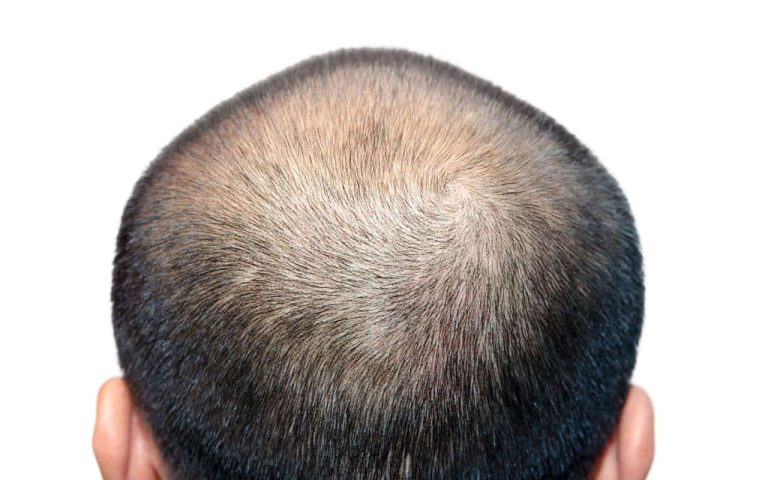
A receding hairline is the most common hairline type in men and the one people most want to do something about. It is sometimes called a high temple hairline, because the hair creeps upwards at the corners first.
It is largely hereditary, but age, stress, hormonal changes, alopecia and years of aggressive styling all play a part. Women get receding hairlines too, though the pattern is usually diffuse thinning rather than a sharp M shape.
How to tell if your hairline is receding
Hair loss is hereditary, so a reasonable first step is to look at when your parents and grandparents started losing theirs. Beyond family history, the signs to look for are:
- Gradual thinning, particularly at the temples
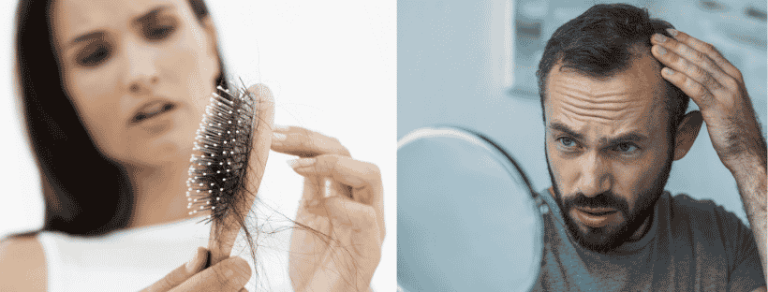
- More hair than usual coming out on the pillow, in the shower or in the brush
- Bald patches appearing on the scalp
- A hairline that has become noticeably uneven
- A widow’s peak or M shape that is getting deeper
One point worth knowing: shedding 50 to 100 hairs a day is completely normal at any age. Shedding on its own tells you very little. What matters is whether the hairline itself is moving.
The Norwood scale, stage by stage
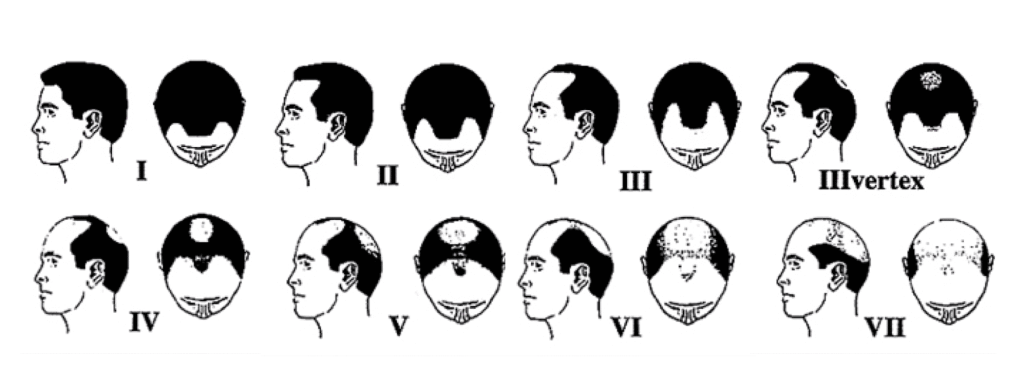
Male hair loss is measured on the Norwood scale, which runs through seven stages. Knowing roughly where you sit on it is the single most useful thing you can bring to a consultation, because it largely determines what is achievable.
- Stage 1 – no visible recession. This is a full, adolescent hairline.
- Stage 2 – slight recession at both temples. This is the NW2 hairline, and it is where a mature hairline and an early receding one look almost identical.
- Stage 3 – the temples deepen and the hair in them starts to thin noticeably. This is generally the first stage most people would call balding.
- Stage 4 – recession continues and thinning begins on the crown.
- Stage 5 – the crown and the front are both clearly affected, with a narrowing band of hair between them.
- Stage 6 – that band breaks down as the hair across the top of the scalp goes.
- Stage 7 – hair remains only at the sides and back, in the permanent zone.
The stage matters because a hair transplant moves hair from the back and sides rather than creating new hair. The further along the scale you are, the more area there is to cover from the same donor supply, which is why an honest assessment is worth more than an optimistic quote.
Which hairline types are a sign of hair loss?
Of the seven, most are just the shape of your head and need no treatment at all:
- Straight, low and middle hairlines are genetic shapes, not hair loss.
- A mature hairline is a normal one-off change in your late teens and twenties that then stops.
- An uneven hairline may be genetic, or may be an early sign, depending on whether it is changing.
- A widow’s peak and a receding hairline are the two that usually indicate ongoing hair loss.
The distinction that trips most people up is mature versus receding. A mature hairline moves back a little and then stays put. A receding one keeps going. If you are not sure which you have, the answer is in whether it has changed over the last two or three years.
How to fix a receding hairline
Tattoos, fibre sprays and makeup all work in the sense that they hide it, but they are cosmetic and temporary, and they have to be reapplied. There are two treatments that actually change the hairline itself.
Non-surgical treatment can slow the loss and thicken what you still have, which is often the right first step if the hairline has only just started to move. Our non-surgical hair loss treatments start from around £25 a month.
A hair transplant is the permanent option, because it moves your own follicles from the back and sides of the head into the hairline, where they carry on growing. It is the only way to bring a receded hairline genuinely forward. You can see real before and after hairline results from our clinics, and most procedures cost between £3,000 and £7,000 depending on how many grafts you need.
A receding hairline can be upsetting, but it carries no risk to your health, and there is no obligation to treat it at all. Plenty of people come to us, get an honest answer and decide to leave it, which is a perfectly reasonable outcome.
Not sure which hairline you have?
If you cannot tell whether your hairline is maturing or receding, that is exactly the sort of thing a free assessment settles in a few minutes. We measure your donor density, map the pattern and tell you plainly what is happening, including when the answer is that nothing needs doing. Around 40% of the people we assess turn out to be suitable for surgery, and we will say so when you are not.
Book a free video assessment, or call us on 0800 043 0993.
See what your hair transplant could cost
A personalised price and suitability check, with no obligation.
Get A PriceDownload Our Price Guide NowOpens in WhatsApp