Hair Transplants For Young Men: How Young Is Too Young?

Most men who come to us for a hair transplant are somewhere between 40 and 60. A growing number are in their twenties, and that is where the difficult conversations happen.
The honest answer is that being young is not in itself a reason to say no. But it is the single biggest reason we do say no, and it is worth understanding why before you spend anything.
The problem is not your age. It is that your pattern has not finished.
Male pattern baldness is progressive. At 25 you are somewhere near the beginning of it, and nobody can see the whole of where it is going.
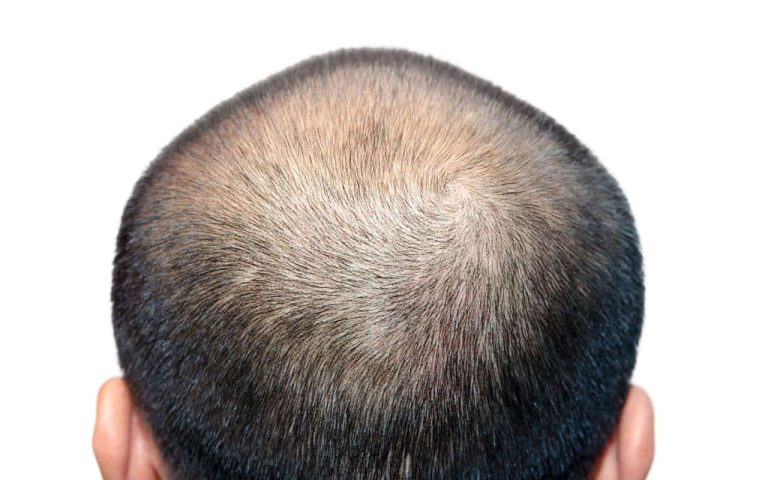
Here is what happens when a transplant is done too early. You notice thinning at the temples or the hairline, and grafts are placed to fill it. Those grafts come from the back of your head, they are not sensitive to DHT, and they stay. Meanwhile the native hair around them is still sensitive, and it carries on receding exactly as it was always going to.
Five or ten years later the transplanted hair is still there, in a band, with a gap opening up behind it. It looks like the transplant failed. It did not. It was placed in a pattern that no longer exists.
Correcting that means using more donor hair, and by then there is less of it.
The donor area is the real constraint
You are born with a fixed amount of DHT resistant hair at the back and sides of your head. It does not replenish. Every graft you use in your twenties is a graft you cannot use in your forties, when you will probably need it more.
A surgeon planning for a young man has to design a hairline that will still look right in twenty years, keep a reserve for the loss that has not happened yet, and resist the temptation to give you back the hairline you had at eighteen. That is why a good result on a young patient often looks more conservative than the patient wanted on the day.
When we do say yes
- The pattern has been stable for a reasonable period, rather than actively galloping
- Donor density is strong enough to cover both what you need now and what is likely later
- The loss is not diffuse, because scattered thinning is the hardest pattern to treat early
- Expectations are realistic about hairline height and density
- Scarring or trauma is involved rather than pattern baldness, since that does not progress
That last one matters. Hair loss from a burn, an injury, an old operation or a congenital scalp condition is not progressive, so age is far less of an obstacle. Those cases can often be treated young with a very predictable result.
What to do instead, if the answer is not yet
Not yet is not the same as never, and it is not a brush off. The useful thing to do in the meantime is protect what you have.
Non-surgical treatment from around £25 a month works on the native hair that is still sensitive to DHT, which is precisely the hair a transplant cannot help. Slowing the loss now means that when you do have surgery, there is more to work with and less to chase.
It also buys the most valuable thing of all, which is information. A few years tells you and your surgeon what your pattern is actually doing, and that makes the eventual plan far better.
Getting an honest answer
Around four in ten of the people we assess turn out to be suitable for surgery. The rest are told so, and a fair share of those are young men who have been told yes elsewhere.
If you want to know where you stand, book a free video assessment. It costs nothing, there is no obligation, and being told to wait is a legitimate outcome rather than a wasted appointment. You may also want to read how long a hair transplant lasts, which covers the same trap from the other end.
See what your hair transplant could cost
A personalised price and suitability check, with no obligation.
Get A PriceDownload Our Price Guide NowOpens in WhatsApp