UK Hair Transplant Clinics
Hair Loss Treatments For Men And Women
Surgical and non-surgical hair loss treatments across 15 CQC registered UK clinics, with a free assessment first and a written guarantee with every treatment.
Where to start
Hair loss treatments that start with an honest assessment
There is no single answer to hair loss, which is why we offer a full range of hair loss treatments rather than pushing everyone towards surgery. What suits you depends on why you are losing hair, how far it has progressed, and whether the follicles in the affected area are still alive.
That is why every treatment here begins with a free assessment. We measure your donor density, map the pattern of loss and tell you plainly what will work. Only around 40% of the people we assess turn out to be suitable for a hair transplant, and we will say so when surgery is not the right answer.
Having advised more than 100,000 people over the past fifteen years, we would rather turn work away than sell you a treatment that will not deliver. Every one of our surgical facilities is registered with the CQC, and every treatment comes with a written guarantee.
The cause matters
What causes hair loss
Choosing between hair loss treatments is far easier once you know what is driving the loss. These are the causes we see most often.
Male pattern baldness
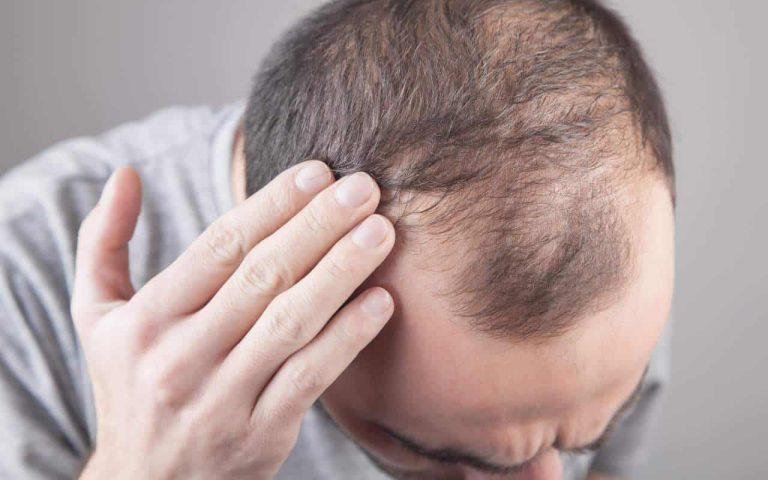
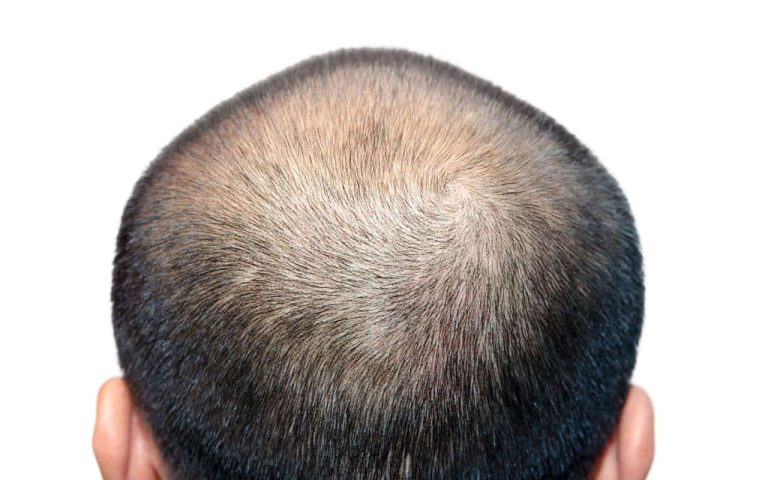
By far the most common cause in men. The hormone DHT gradually attacks genetically susceptible follicles, and each growth cycle produces a finer hair than the last until the follicle stops producing visible hair altogether. The follicles at the back and sides of the head are naturally resistant to DHT, which is what makes a transplant possible.
Hair loss in women
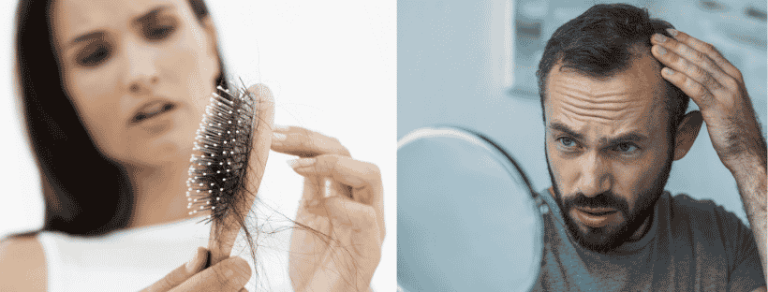
Rarely one single cause. Thyroid conditions, hormonal changes, pregnancy, stress, alopecia, heat styling and tight hairstyles can all contribute. Women also tend to experience diffuse thinning across the scalp rather than defined bald areas, which changes what treatment is appropriate.
Stress and illness
Researchers have identified chemicals produced by the body during periods of stress that affect hair growth. Illness, surgery, rapid weight loss and some medical treatments such as chemotherapy can also trigger shedding, though this type of loss often recovers once the cause resolves.
Styling and traction
Tight ponytails, plaits, corn rows, badly fitted extensions and heated rollers all put sustained tension on the hair. Over time this causes traction alopecia, and in severe cases the damage becomes permanent.
Ageing
Some thinning with age is completely normal. Someone aged 20 to 30 typically has around 615 hair follicles per square centimetre. That falls to roughly 485 by 50 and around 435 by 80 to 90, and each individual hair becomes finer, so hair becomes both sparser and thinner over time.
Why choose us
Why patients choose UK Hair Transplant Clinics
Advanced Surgical Transplant Treatments
UK Hair's Consultant Clinicians, Patient Coordinators, Core Operations Managers and Surgical Team work together with the goal of providing patients the best experience possible. Many have been with UK Hair for more than 5 years and are among the most skilled and experienced in the field of hair transplantation. The UK Hair team have travelled to many conferences over the years, helping to demonstrate advanced surgical techniques, including the Maxi Hair Transplant, for those patients with more severe hair loss. Such is our recognised expertise in the field of hair restoration, UKHair staff are often approached to teach assistants from other clinics the nuances of the more advanced techniques. As a result, physicians from around the world regularly link in to UKHair to observe and learn which gives us great pride in the confidence placed in them and the respect with which they are held in the hair loss assessment industry.
Free Retreat Or Your Money Back
It is easy to make bold statements of success and much harder to stand behind them in a fast growing and heavily advertised market. We deal with real problems and appropriate solutions every day, and we have never been afraid of backing up what we claim. We only accept patients we know we can help, and we set expectations we know can be met, which is what allows us to offer a guarantee at all. If we are unable to achieve the treatment plan and the realistic result that goes with it, we will welcome you back and treat you again at no extra cost. That happens rarely. In the event that we cannot retreat you for medical reasons, you receive an appropriate refund instead.
All Surgical Facilities Are Registered With The Government's CQC (Care Quality Commission)
Our facilities are a blend of clinical technology and considered design. Our treatment and surgery rooms are designed to combine the latest in science and aesthetics. Our surgery rooms are fully equipped to handle a full day of Microscopic Follicular Unit Hair Transplantation or Follicular Unit Extraction surgery, one patient per room. Each surgery room is adjunct to a row of five to six high definition, optimal resolution microscope stations where technicians cut and sliver a patient's donor strip. No matter which facility you choose for your treatment, our attentive staff and relaxed, contemporary setting helps put patients at ease from the minute they have their hair loss assessment to the moment the surgery is complete.
Surgeons Who Only Do Hair Restoration
The physicians at UK Hair perform just one procedure: hair transplantation. They work one-on-one with patients throughout the process and typically prefer to schedule only one procedure a day to give each patient the attention and care they deserve.
Written Guarantee With Your Treatment
We advise over 6,000 patients every year. Hair loss and its correction is all we do, which is why we are willing to put our guarantee in writing rather than leave it as something said in a consultation room. Every surgical procedure we carry out comes with a written guarantee that sets out what we have agreed to achieve, and exactly what happens if we do not achieve it.
We Would Rather Say No Than Get It Wrong
We stand by our guarantee, but we take no pleasure in retreating patients, because for most people that is an added inconvenience they could do without. We do everything we can to avoid it being necessary, and that starts at the assessment. Only around 40% of the people we assess turn out to be suitable for a hair transplant, and we will say so when surgery is not the right answer. Years of experience mean we can usually spot a potential problem at assessment, and where we do, we say so.
Our treatments
The hair loss treatments we offer
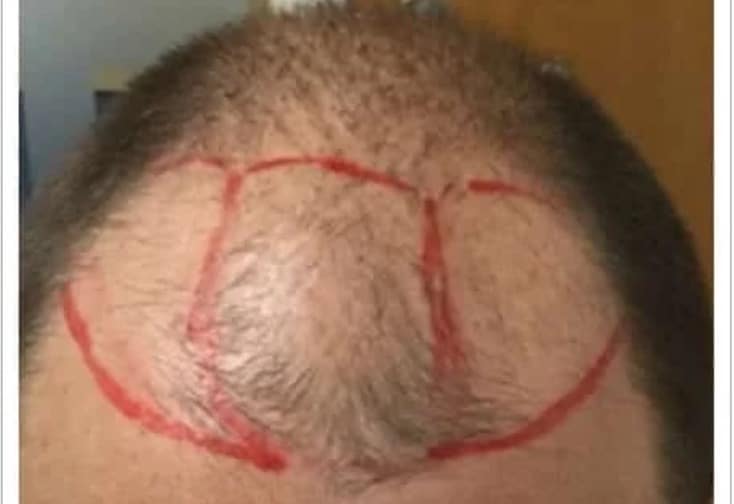
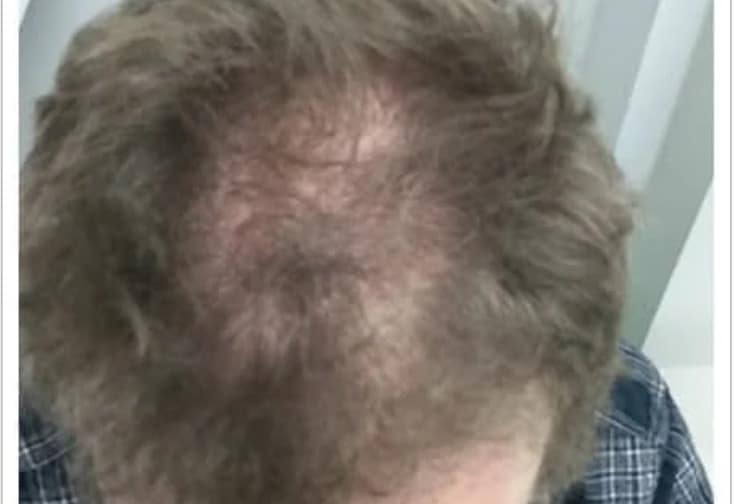
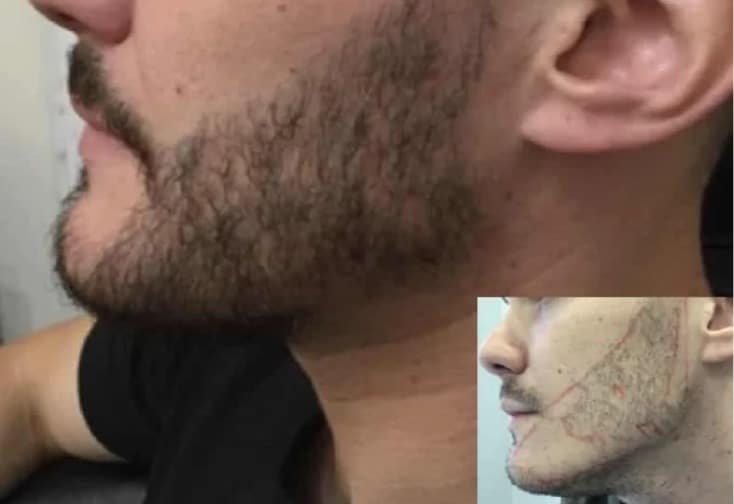
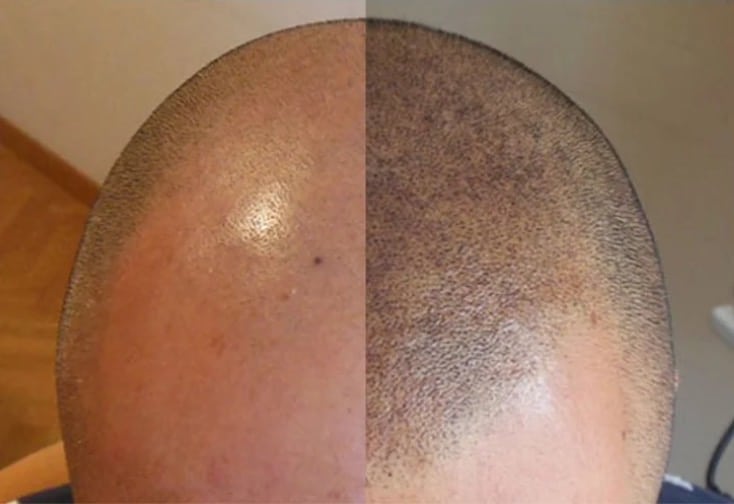
Six treatment routes, covering surgical restoration, non-surgical maintenance and cosmetic density. Your consultation decides which combination is right for you.
Making the choice
Surgical or non-surgical, which is right for you
The deciding factor is whether the follicles in the area that concerns you are still alive. Non-surgical treatment works by protecting and thickening hair that is still growing, even when those hairs have miniaturised to the point of being barely visible. It cannot revive a follicle that has died.
A hair transplant does the opposite. It moves permanent, DHT resistant follicles from the back and sides of your head into an area where hair has genuinely gone. It needs space to work, so transplanting into an area that is thinning rather than bald risks damaging the hair still growing there.
In practice a lot of people benefit from both. Surgery restores the area treated, and non-surgical treatment protects the native hair around it so the overall result still looks right in five or ten years. Where neither is suitable, scalp micro pigmentation can create the appearance of density without surgery at all.
Hair loss treatment at a glance
Around 40% of the people we assess are suitable for a hair transplant. The rest are offered non-surgical treatment, scalp micro pigmentation, or honest advice to do nothing for now.
Non-surgical treatment starts from under £1 a day. Transplants typically range from £3,000 to £7,000 depending on graft numbers, with plans from £70 a month.
Non-surgical results are judged at 6 to 12 months. Transplanted hair sheds first, then regrows, with the final result at around 12 months.
Every treatment carries a written guarantee, and our tablets carry a refund credit if your hair is not visibly thicker after 12 months.
Get In Touch
Which hair loss treatment is right for you?
Leave your details and a friendly, fully trained advisor will call you back. All calls are confidential, with no obligation, and we will tell you honestly whether surgery is right for you.
"*" indicates required fields
Cost & Finance
Monthly payment plans available from £70
We know the cost of a hair transplant can be daunting. We offer regular promotions to customers who have been for consultations; you just have to attend one to be in with a chance of hearing about them.
Another way to pay is in monthly instalments. You can spread the cost over 12 to 60 months, with payments ranging from £50 to £200 per month depending on how much you want to pay and how quickly you want the agreement to finish. There are no hidden fees. The quote you are given after your assessment is the price you pay, it includes your aftercare and products, and it is covered by our price match guarantee.
Save up to £2,000 · Payment plans from £70 · Guarantee with treatment · Price match guarantee
Plans from
£70 / month
Spread over
12–60 months
Save up to
£2,000
FAQs
Hair loss treatment questions
Can certain hairstyles cause hair loss?
Yes. Styles that put tension on the hair, such as tight ponytails, plaits or corn rows, can cause a type of loss called traction alopecia. Winding hair tightly onto rollers, particularly heated ones, has the same damaging effect.
Can hair extensions cause hair loss?
They can, if they are not fitted properly. Extensions that are too tight pull on the hair and can create bald patches, which in severe cases become permanent.
Does brushing your hair 100 times a day prevent hair loss?
No. Vigorous brushing is more likely to injure the hair and make the problem worse.
Does frequent shampooing make hair fall out?
No. Shampooing simply removes the hairs that have already detached from the follicle.
Can blow drying and heated brushes make hair loss worse?
Yes. Extreme heat damages the proteins in the hair, making it fragile and liable to break off. Careless use of heated brushes or straighteners can also burn the scalp, permanently damaging the follicles in that area.
Do protein shampoos and conditioners help hair grow?
No. Protein containing conditioners temporarily fill in defects on the surface of the hair shaft, making it feel smoother and thicker, but they do not affect growth.
Do hair dyes, perms and hairsprays cause hair loss?
No. They do not affect thinning hair, and perms and hairsprays can actually help to disguise it.
If my father has a full head of hair, will I avoid going bald?
Not necessarily. A tendency to baldness is inherited and probably involves a combination of genes, so you are not automatically in the clear. It is not true, as is sometimes claimed, that only genes from the mother's side are involved.
Can stress cause hair loss?
Yes. Researchers have identified chemicals produced by the body during periods of stress that can affect hair growth.
Is it normal to start losing hair in your thirties?
Yes. Someone aged 20 to 30 typically has around 615 hair follicles per square centimetre, falling to about 485 by 50 and around 435 by 80 to 90. Each hair also becomes finer, so hair naturally becomes both thinner and sparser with age.
Is a hair transplant permanent?
For most people yes. Transplanted hair behaves like the hair it came from, so it lasts a lifetime or well into old age when the procedure is done correctly. We are redistributing permanent hair rather than creating new follicles.
Do hair transplants leave scars?
FUT leaves a very fine linear scar in the donor area that is hidden by hair at grade 2 or longer, and trichophytic closure makes it extremely hard to detect. FUE leaves tiny dot marks instead of a line. We would not recommend shaving the back of the head very closely, as healing varies between people.
Find your local clinic
Assessments are provided right across the UK, with 85% of people within a short drive of a assessment location. Evening and weekend free assessments are available. Each clinic offers the same standard of care, the same guarantee and the same honest assessment, so wherever you are in the UK you can expect the same experience from your first assessment through to your aftercare appointments. Search your city or filter by nation.

Find out which treatment is right for you
Book a free video assessment with our team. We will tell you honestly what will work, what will not, and what it costs.